Saturday, April 14, 2018

Life with Crohn's | Part 3: Medications

The first time I told someone I had Crohn's disease outside of my close group of friends who originally knew about my diagnosis was just a couple weeks after Kevin and I started dating. We were standing outside his car in the Downtown Disney parking lot, and it was 2pm. My phone alarm went off to remind me to take my medication. I didn't have any water with me (as usual), so I popped two bright blue horse pills in my mouth and swallowed them dry. Kevin had seen this a couple of times, but on this particular occasion, asked what I was taking and why. I told him I have Crohn's disease, and had to take these pills 3 times per day. His reaction? "Crohn's disease? Like Kurt Cobain?"

Having a chronic illness means I've taken a lot of medications over the past 10 years, some more innocuous, and some more intense. I've been on everything from steroids to chemotherapy drugs to antibiotics to biologics, and it seems like everything in between. Below is an exciting tale of my drug cocktail (and costs) over time!

Prednisone (steroid)
Total Cost: $154 / 30 days
Cost with insurance: $154 / 30 days
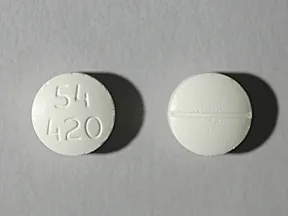
Image result for prednisone
Prednisone
The first medication I was prescribed was a steroid, Prednisone, to help reduce the inflammation in my small intestine. Prednisone is probably my least favorite med I have taken for Crohn's, not because the meds themselves were awful, but rather because of the side effects. First, I had "moon face," or swelling in the face (and other body parts) from water retention. This is a common side effect of Prednisone. The other side effect was the crazy mood swings. I don't remember specifics, but I do remember feeling crazy and having no control over my emotions or reactions, which for a 20-year old girl about to travel abroad for a semester, was not a fun time. The longer-term effects of these pills is osteoperosis. I had to take Prednisone for 20 weeks, starting at 20mg for 4 weeks, then dropping down the dose by 2mg every week until I reached 0, which was almost the entire time I was living in Salzburg.

Pentasa (mesalamine)
Total cost: $3,257 / 30 days
Cost with insurance: $70 / 30 days
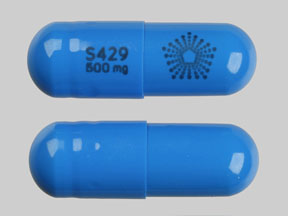
Image result for pentasa
Pentasa
The other medication I took when I was first diagnosed was Pentasa. I was prescribed two bright blue pills, three times per day. From 2008 until 2012, I took those pills with me everywhere I went to take at 8am, 2pm, and 8pm. I had to set an alarm on my phone to remind myself that it was drug time, though about 50% of the time, I didn't have water with me when it was time to take them, so I dry-swallowed 2 big blue pills on the regular, and got pretty good at it. About a week prior to my hospitalization in 2011, my doctor increased my frequency of these lovely pills to 4 times per day (8 pills each day!)

Bifera (ferrous sulfate)
Total cost: $137 / 30 days
Cost with insurance: $70 / 30 days
Image result for ferrous sulfate
Bifera
I've always had slightly low iron counts, and have been on and off iron pills since I was a teenager. My iron levels kept getting lower and lower - I was sometimes so anemic that I was ineligible to swim in college and had to do a lot of work to get my iron levels back up. Regular iron pills didn't always work for me, so my doctors would prescribe Bifera, a prescription-strength iron supplement.

Entocort (budesonide; steroid)
Total cost: $1,795 / 30 days
Cost with insurance: $15 / 30 days

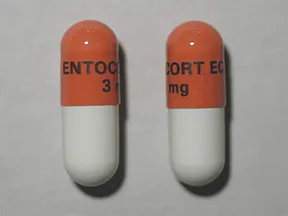
Image result for entocort
Entocort
My first minor flare after my diagnosis happened around 2010. Instead of hopping off to the hospital, my doctor wanted to try a steroid, but not Prednisone, since it is so nasty. These little guys are specially formulated to dissolve as they pass through the small intestine, so they release the medication right where it is needed for Crohn's disease. Of course, doctors always prescribe 3 pills per day (all at once) for maximum effect.

Mercaptopurine (6-MP)
Total cost: $98 / 30 days
Cost with insurance: $0 / 30 days
Image result for mercaptopurine
Mercaptopurine
Next came the more intense drugs. After my first hospitalization in 2011, my doctor first added in Mercaptopurine, or 6-MP, a chemotherapy drug also commonly used to treat Inflammatory Bowel Disease (Crohn's or Ulcerative Colitis). The scary possible side-effects of this medication luckily haven't affected me to this point. I'm still taking it to this day, though on double the dose I started on in 2011 (it was doubled after my second hospitalization in 2013). The one side effect I have really experienced has only been observed in my routine blood work, with some slightly elevated liver levels, though nothing to be too worried about (yet).

Ferric Gluconate (IV iron supplement)
Total cost: $340 / infusion
Cost with insurance: $0 / infusion
Image result for ferric gluconate iv
Sodium Ferric Gluconate
In 2011, not long after I stared grad school in San Diego, my iron levels were significantly lower than normal (me: 8.7; normal: 11-14; below 9 is critical - no wonder I was so tired!) I started seeing a Hematologist at Sharp HealthCare (Dr. Andrew Hampshire), who prescribed me an iron infusion, since my iron pills clearly weren't working, but we didn't want to go too extreme with a blood transfusion, unless it was necessary. In 2011, I received three iron infusions over the course of three weeks; then in 2012, I received two additional infusions over two weeks when my iron levels were too low again.

Humira (adalimumab; biologic)
Total cost: $2,523 / 28 days
Cost with insurance: $0 / 28 days (with prior authorization)
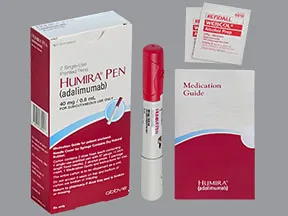
Image result for humira
Humira
In 2012 after a test showing my small intestine had formed a fistula, my doctor wanted to increase the intensity of the medications, and recommended I start a biologic medication. These are the ones you see advertised all the time on TV comercials: Humira, Stelara, etc. He gave me the choice between Humira and Remicade to start. Humira meant I could still take the medications at home on my own, but would have to give myself a shot every two weeks. Remicade, on the other hand, was only every 8 weeks, but I would have to go in to a medical office for a 3+ hour IV. At that time, I elected to go with Humira. Kevin really enjoyed giving me those shots every other Saturday, so I let him do that when he was home, because I hated it. I would rotate my shots from right leg to left leg to left stomach to right stomach, then start that rotation again. After my surgery in 2013, my doctor decided to keep me on Humira; she felt that the reason I had not reacted as well was because my disease was too far progressed. With the major issues removed by surgery, I was able to stay on Humira in remission for almost two more years.

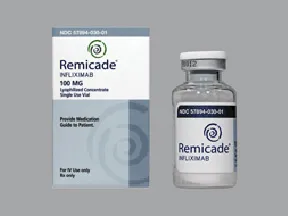
Remicade (infusion; biologic)
Total cost: ~$18,000 / 8 weeks
Cost with insurance: ~$1,500 / 8 weeks (with prior authorization)

Image result for remicade
Remicade (IV)
Once it was clear that the Humira wasn't working anymore, my doctor originally prescribed me Entivyo, but my insurance company denied the prior authorization, saying that they wanted me to try Remicade first. So here we are. Every 8 weeks, I receive an infusion of Remicade, a 3+ hour procedure, which typically takes place in an infusion center, but since moving to Las Vegas, I have been lucky enough to get a home infusion - a nurse comes to my house, sets me up, mixes the meds, and hangs out with me for 3 hours. The most frustrating part of this whole process has been the prior authorization process. Everyone (doctors, insurance company) has been really slow about getting everything approved, something that has to happen once per year AND every time I move (which has happened a lot in the past 16 months...)

Biologics, Mercaptopurine, and steroids all decrease the immune system, so the main side effect I have from all of these medications is secondary infections... most recently including Shingles, because instead of 30, my body thinks its 75. This drug cocktail serves as a strong reminder that there is no cure for Crohn's disease. All of these medications are designed to keep the disease at bay, but can loose their effectiveness without warning.

Let's find a cure for Crohn's!
This year, I am once again taking part in Team Challenge, participating in the Lake Tahoe Triathlon at the end of August for my 10 year anniversary of being diagnosed. You can support my fundraising efforts here.

----


Stay tuned for Part 4: Doctors

Sunday, March 11, 2018

Life with Crohn's | Part 2b: Hospitalization 2011

March 12, 2011: 1-year (dating) anniversary with Kevin. We had a celebratory trip to Las Vegas planned, including a 2 night stay at the Mirage, tickets to The Lion King, and other fun! But then the unexpected happened...

Starting at the beginning of 2011, I was working for Liberty in North Korea, a grassroots nonprofit dedicated to helping North Korean refugees, and educating the public about their perils. I was the Booking Coordinator, helping schedule documentary screenings across the country, working 70+ hour weeks, but loved every minute of it.

In mid-February, I started feeling generally unwell, but didn't think much of it. I had a whole slew of doctor's appointments, both for GI stuff and other health issues at the time. The problem was that I was living and working in Torrance, CA, but seeing doctors in Thousand Oaks, CA, an hour or more drive (through LA traffic) away. One of the doctors noticed that I was pretty severely anemic - nothing new for me - but had my GI check for internal bleeding just in case. Lucky me, no bleeding was found...

A week later (March 11), I was in a lot of (abdominal) pain, was feverish, and my mom convinced me that I needed to go to the hospital to get checked out. I had texted in the morning to ask what appendicitis pain felt like, and got a call telling me to go to the nearest ER! I agreed (tearfully) to go. Bridget, one of my coworkers at the time drove me down the street to Torrance Memorial Hospital, and my mom hopped on a plane out to LAX. Bridget took my car to pick up my mom, then stopped by the Nomad house (where we were living) to pick up some supplies and home comforts for me, since I had gone to the ER straight from work.
Image result for torrance memorial hospital er
Torrance Memorial Hospital Emergency Entrance
I spent nearly 11 hours in the ER with Bridget, Kevin, and eventually my mom, starting with drinking what would become a familiar drink, apple juice mixed with barium, so that they could do a CT scan before admitting me. The results showed a LOT of inflammation in my ileum - where my disease was clearly centered.
"Abnormality of the terminal ileum and of the sigmoid colon . . . There are small fluid collections within the pelvis in association which could represent small microabcesses. Thickening of the wall of the appendix. This probably represents reactive edema secondary to the inflammatory reaction within the pelvis rather than representing superimposed appendicitis."
The ER docs started me on IV antibiotics, and I was placed on a "clear, liquid diet," which essentially consisted of water and broth.

On my first overnight in the hospital, my Hemoglobin (blood test for iron levels) went from 10.5 (lower than the typical 12.0-16.0) to an even lower 8.3. There was a lot of discussion about what should be done to address that, as that was a clear indicator of severe internal bleeding. They tested to determine my blood type so they could be ready for a transfusion, then retested my iron levels 6 hours later. Luckily, my levels stabilized had stabilized to 8.8, still low, but not dropping further, so no need for a blood transfusion.
Image result for hemoglobin
Hemoglobin: a red protein responsible for transporting oxygen in the blood of vertebrates. Its molecule comprises four subunits, each containing an iron atom bound to a heme group.
Other interesting findings from my blood work included:
  • Elevated platelet count (692 at admission, compared to a normal range of 140-440);
  • Elevated white blood cell count, which went back to normal after 3 days of IV antibiotics;
  • Elevated red blood cell count, which remained high throughout my stay; and
  • Fun fact: my blood type is A negative.
My first hospitalization was an interesting experience, to say the least. I was in the hospital for 5 days, had several visitors from work, and sadly, had to miss a fun Vegas weekend. This is an extreme version of missing out on activities because of this disease, but I have missed my fair share of fun due to unruly symptoms - but more on that later.

One memory that has stuck with me was about 1/2 way through my stay. I was taking oral pain medication throughout my stay when I requested it. There was one day when I started having severe abdominal pain, so much pain that I was crying. I called for the nurse, who informed me that I couldn't have another dose for at least an hour. I understand why they didn't want to give me a dose early, but boy was that a rough hour before I could get some relief. I just had to GUT IT OUT.

Upon discharge, I was given instructions to continue taking my previous medications, and start taking some new ones. My prescription list was up to 9 different medications - but more on that later. I took a few additional days off of work, worked from home for a couple of days, and then got right back into it. 

Do you want to help those who have been hospitalized because of this disease?
This year, I am once again taking part in Team Challenge. I will be doing a Race in Orange cycling event on April 7 with Tina, then participating in the Lake Tahoe Triathlon at the end of August for my 10 year anniversary of being diagnosed. You can support my fundraising efforts for these two events here.

----
Stay tuned for Part 3: Medications


Saturday, February 24, 2018

Life with Crohn's | Part 2a: Hospitalization 2013

Today marks 5 years since my last hospital admission!

On February 19, 2013, I was in LA for the PMF semi-finalist assessment, was in grad school, was working on my capstone project, and was not ready for what was coming later in the week.

On February 22, 2013, I was working at the front desk of the pool at UCSD, and for my super healthy lunch, I was eating a bag of Lay's potato chips and a bag of Skittles. I started feeling sick to my stomach, which is a pretty normal occurrence, so I didn't think much of it. Later that night, I was at home, curled up in a ball on the couch from all the pain. Still, I wasn't too concerned. Then the vomit started, around 10 pm. I had Kevin call my boss to say I was sick and would not be at work the following morning - there was just no way I was going to be okay by then. I tried to go to bed, but was in such severe pain, that I moved to the reclining couch and "slept" there for the night.

On February 23, 2013, I woke up still feeling sick. I tried to eat some saltine crackers and drink Sprite. I felt extremely feverish, so I took some Tylenol as well to bring down my fever. I even called my doctor (on a Saturday!) to see what I should do. He said it sounded like a case of gastritis, and to just let it run its course. That night, I was still in severe pain, and had to "sleep" on the couch again.

On February 24, 2013, I was still feeling awful, but I was in grad school, and had to press on. Ashley, a friend and classmate came over to work on a group project. Before she arrived, I unlocked the door so that she could let herself in, since I couldn't even stand up straight, let alone walk to the door in a reasonable amount of time. We worked on a group project for a couple hours before she left. My doctor called me to check in that night. When he heard that I was still feeling sick and in severe pain, he recommended I go to the closest ER. Unfortunately, my doctor at the time was in Thousand Oaks, and I was living in San Diego, so I couldn't go to a hospital where he had privileges.

I packed a bag, but I knew I couldn't drive from all of the pain, so I waited for Kevin to get home from work (I think he was working down at the Naval Base) so that he could drive me. We got to Sharp Memorial Hospital at about 8 pm, and luckily, the ER was relatively empty. I sat outside on a bench while I waited for Kevin to park the car, since I really couldn't walk at that point. When I checked in to the ER, they called a wheelchair over immediately and took me to a room - no wait at all when you are doubled over with abdominal pain!
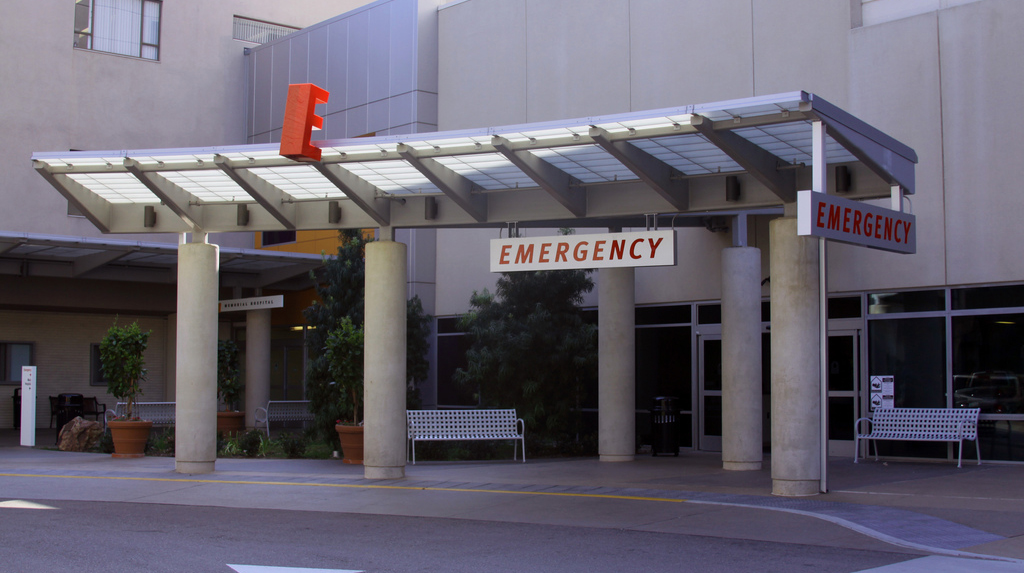
Image result for sharp memorial hospital er
SMH Emergency Entrance
In the ER, I had the "privilege" of drinking apple juice mixed with barium for a CT to see what was going on. They knew I was having a Crohn's flare, but needed to see if there was just swelling, or if it was worse, such as a blockage. That CT scan was much better than my original diagnosis scan (mostly because there was no enema!) Not long after that was completed, the ER doctor and nurses came in to quiz me: "Had you eaten any sharp objects recently? No? You have not eaten a pin or part of a knife? Are you sure? No? Okay then... The on-call surgeon will be in soon to talk."

It was at that point that Kevin called my mom and told her she should probably come to San Diego. It was about 1 am at that point, so she booked a flight from ABQ to SAN for first thing in the morning, to land around 11 am.

The on-call surgeon, Dr. Shawn Bench, came in pretty soon after that. He explained that the CT results looked like my small intestine had ruptured! He noted that I was in good spirits, because I smiled at him when he walked in the door, so he didn't think I needed to have surgery right away that night, that we could schedule for the morning. I guess my good manners got me an extra 12 hours with my full small intestine. Someone started me on IV antibiotics and fluids, since I was extremely dehydrated from not being able to eat/drink anything for 48 hours.

Dr. Bench
After that the fun started. A nurse came in to insert an NG tube. Now if you've never experienced this, think of someone trying to stick a pen up your nose and down your throat. Of course, because I am special, both of my nostrils are always extremely swollen (Can we attribute that to Crohn's? Probably), but the nurse somehow managed to get the tube in correctly, after several tries with both sides. No one explained to me what the tube was for, all I knew is that it was up my nose, which was uncomfortable, and down my throat, resting on my tonsils, which were also pretty swollen at the time.

Finally, at who knows what time, I was taken upstairs to a room on the 4th floor - south. SMH's south-facing floors have a nice view of the city, and the higher-up floors almost have a view of the ocean, so that was pretty nice. However, nobody did anything with that darn NG tube. I still didn't understand why it was up my nose, but I was too tired and in a lot of pain still, even after having received a couple doses of morphine. So I tried to sleep. A couple hours later, I woke up feeling extremely nauseous, and very gag-y from the tube down my throat. I called the nurse and tried to explain without throwing up that I was going to throw up. Someone finally came into my room to help me get to the bathroom for that...

I finally got a couple more hours of fitful sleep, until the shift change at 7 am. The new doctor came in and started barking orders, such as "Somebody hook up her NG tube! Why was this not hooked up last night?!" Apparently that darn tube up the nose/down the throat was supposed to be sucking ickies out of my stomach and out through the tube. Good to know. That probably would have prevented the middle-of-the-night throwing up.

The surgeon from the night before came in to talk about when he was going to do my surgery. I asked him if he would consider waiting until my mom arrived. I also asked him to call my GI doctor in Thousand Oaks to make sure he understood my case as much as possible before cutting me open. He explained the surgery to me - it would be an exploratory surgery to see what was going on, possibly remove some inflamed and/or ruptured intestine, and that I may end up with a temporary ostomy bag. That was a line that I had seared into my brain - I had to repeat it every time anyone wanted to talk about the surgery - in my room, in pre-op, in the surgery room before being knocked out - over and over again.

Finally, I had the surgery, and the only two things I remember about the hours afterward were asking if I had "a bag" right away, and then during the night afterward, being told my fever was running to high and I needed to make it go down. They gave me ice and cool compresses, which helped temporarily, but I was still too feverish for comfort, so I was transferred to the SICU (surgical intensive care unit) on the 2nd floor.

I spent something like four days in the SICU. I don't remember much of the first day, except that I had a really nice nurse who also had Crohn's. She even recommended a San Diego-based GI doctor, who turned out to be excellent, Dr. Alissa Speziale with Sharp Rees-Stealy. Finally on the 2nd or 3rd day, I was allowed to have visitors (aside from Kevin, my mom, and Kevin's mom). A bunch of my grad school friends (Maura, Charlotte, Ashley, Marla, Jeff, and later Jess and Zach... possibly others, my morphine-addled brain at the time isn't letting me remember) came by with a card signed by classmates, stuffed animals, and flowers (which I only got to see a picture of because they don't allow flowers in ICU rooms). I got other gifts from friends and family - a stuffed penguin from Aunt Mary, flowers all the way from Thailand from Ja, and lots of other love and support. Kevin's mom came down to visit, and our moms spent a night in a hotel instead of in the hospital.

The worst part about my stay in the SICU was not long after they took my catheter out, I had a... terrible... nurse. I wasn't yet able to get out of bed, so anytime I had to pee, I had to call for the nurse and use a bed pan, not something I recommend, especially when your stomach was recently ripped in half. Instead of waiting for the lift team to help get me on the bed pan, she had me roll myself over and back, and then left me on the bed pan for 10 minutes to go tend to another patient. Not Cool. Needless to say, she was not my favorite.
"Smiling" with penguin in the ICU
I was finally moved to a regular room on the first floor, which turned out to be the cancer unit. That is where things were finally looking up. My nurse assistant's name was Kelly, and she was a bundle of joy - a great attitude to have when working on the first floor. I was able to walk to get my legs and muscles working again by walking around the unit, either with my mom, Kevin, or nurse assistant Kelly, I was able to start drinking water, and then one morning, they took the NG tube out! My surgeon told me if I didn't throw up that day, that I could finally have some solid food. I hardly even had a stomach ache, let alone nausea, so I was allowed to eat! Since I wasn't hooked up to the NG tube, I was even allowed to shower. After the shower, my fever finally broke completely for the first time in almost a week.

A couple of days later, the doctors agreed that I could go home. I was glad to hear that, but I was also scared. Was I ready to go home? Could I handle it? What if everything fell apart and I had to go back? I was lucky to have such a strong support system. Kevin was ready and waiting for me to come home, and my dad even flew out for a week after I was discharged. My parents acted as my chauffeurs while Kevin worked (I was still on strong painkillers and was not allowed to drive). They took me to appointments, and made sure we were well-fed, even though I didn't have much of an appetite for about a month after the surgery. After my parents left, I still had a strong support system. At school, I was allowed to take incomplete for all of my courses for the quarter, and had agreements with each professor for the work I had to complete in order to pass. There was one doctor's appointment I had to go to while still on painkillers, and my friend Charlotte drove me.

A lot of people describe friends and family pulling away during and after a major medical event like this. I feel lucky that I had the opposite happen. I feel like many of my relationships got stronger as a result. People show their true colors, and luckily, all of the colors I saw were good.

Now, I am doing everything I can to ensure I don't end up back in the hospital. While there are things out of my control, I do what I know I can. My parting message to my care team was "This was fun, let's never do it again!"

Do you want to help those who have been hospitalized because of this disease?
This year, I am once again taking part in Team Challenge. I will be doing a Race in Orange cycling event on April 7 with Tina, then participating in the Lake Tahoe Triathlon at the end of August for my 10 year anniversary of being diagnosed. You can support my fundraising efforts for these two events here.


-----
Stay tuned for Part 2b: Hospitalization 2011


Monday, February 5, 2018

Life with Crohn's | Part 1: Diagnosis

"It looks like you have Crohn's Disease"

It was August 11, 2008. I was doubled over in pain which had been getting progressively worse for 3 days, and went to the doctor assuming a case of Appendicitis. Several hours later, here's what we knew:
"Transmural wall thickening and luminal narrowing involving the distal/terminal ileum, with associated mild surrounding stranding, ill-defined wispy fludi and regional pericecal adenopathy. The findings are most suggestive of an infectious or inflammatory ileitis, to be correlated clinically for IBD/Crohn's."
WHAT?

The CT of my abdomen and pelvis with contrast was fairly traumatic. To start, when we went to the hospital registration desk to "schedule" the CT, they tried to schedule it for a week in the future, instead of right away (or STAT in doctor speak). After several minutes of calls to my doctor's office, I was scheduled for an appointment ASAP. I had to wait for about an hour in the waiting area, as there were some cases that came through the ER - a car accident, if I remember correctly. Finally it was my turn.

The technician administered the barium for the contrast via enema, something I would never wish on anyone, even my worst enemy. I won't go into the details, but it was unpleasant, and extremely painful due to the unknown swelling in my small intestine. After the imaging was complete, I ran to the closest toilet, about 100 yards down the hallway. Again, I would never wish this on my worst enemy. Luckily for me, I wasn't alone: both of my parents were at the hospital with me, and my friend Tina even stopped by while we waited for those CT results, since it was now approaching 6 pm.

The CT, along with blood work indicating extreme swelling/pain and possible internal bleeding, were strong indicators for inflammatory bowel disease, most likely Crohn's; all that needed to happen to finalize the diagnosis was a colonoscopy. The most shocking blood result was my C-reactive protein (CRP). A test result showing a CRP level greater than 10 mg/L is a sign of serious infection, trauma, or chronic disease; mine was 30.4!

Colonoscopy: Age 20

On August 21, I went in for my first (of 5 so far) colonoscopies. "There is evidence of superficial mucosal ulceration with inflamed granulation tissue." What it boiled down to is inflammation in the area of the small intestine commonly associated with Crohn's, and there was evidence of ulceration, also commonly associated with Crohn's. Voila. Less than 2 weeks after I started feeling terrible, I had a diagnosis: Crohn's Disease.

At the time, I didn't realize how lucky I was. I have since heard stories of it taking months or years before a final diagnosis of Crohn's or Ulcerative Colitis. Granted, for years, I had been complaining about stomach pain, but it had never been severe enough to look into more than taking some antacids.

Knowing what I know now, I'm thankful that I had a Crohn's flare then. I was able to start medication right away that helps to keep the disease from deteriorating my digestive system even more than it would without meds - and it was good to have that diagnosis for my future hospitalizations...

Do you want to help those who are newly diagnosed, like I was 10 years ago?

This year, I am once again taking part in Team Challenge. I will be doing a Race in Orange cycling event on April 7 with Tina (the same Tina who was there for my diagnosis), then participating in the Lake Tahoe Triathlon at the end of August for my 10 year anniversary of being diagnosed. You can support my fundraising efforts for these two events here.


-----
Stay tuned for Part 2: Hospitalization 2013

Friday, January 26, 2018

Life with Crohn's | Introduction

It has been 5 years since I was last hospitalized, 7 years since my first hospitalization, and nearly 10 years since my diagnosis. 

I started this blog before I was diagnosed to document my DC internship, then my adventures in Salzburg - but everything changed in August 2008 when I first heard the words "Crohn's Disease."

Over the next few months, I'll be writing a series of blog posts about my journey over the past 10 years with this disease:
Since 2016, I have also been participating in the Crohn's & Colitis Foundations' Team Challenge program, an endurance training and fundraising programs to support the Foundation's efforts to find a cure and support those living with Crohn's Disease and Ulcerative Colitis. You can support this year's triathlon efforts here